Custom Laundry Room Storage Ideas for Small Spaces
Effective laundry room storage for small spaces begins with precise measurements, appliance clearances, and our household’s daily routine. We use custom cabinets, vertical storage, pull-out hampers, folding surfaces, and drying features to organize compact laundry areas. These solutions keep appliances, utilities, and walkways accessible.
Key Takeaways
- We plan storage around usable wall space, appliance layouts, required clearances, and access to vents, controls, plumbing, and electrical connections.
- We maximize vertical space with upper cabinets, tall utility cabinets, adjustable shelves, and wall-mounted organizers before adding floor storage.
- We support the laundry routine with dedicated zones for sorting, folding, hanging, supply storage, and cleaning tools.
- We select storage features that suit the room type, including laundry closets, hallway spaces, narrow utility rooms, and stacked washer and dryer layouts.
- We recommend custom storage for unusual dimensions, obstructions, or limited wall space that make standard organizers less effective.
Plan Storage Around the Room’s Real Limits
Small laundry rooms often have limited floor space, inadequate shelving, exposed supplies, no clear folding area, awkward appliance placement, and unused wall height. Effective laundry room storage ideas begin with the room’s actual dimensions and the household routine, not with a one-size-fits-all organizer.
A compact room can work hard when storage supports the order of daily tasks. We first look at where laundry enters the room, where sorting happens, how appliances open, where supplies need to sit, and where clean items can be folded or hung. This approach creates practical laundry room storage ideas for small spaces without crowding the room or blocking essential access.
Before We Plan Laundry Room Storage
Start with the details that shape a safe, usable layout:
- Measure usable wall width, depth, and height.
- Identify whether appliances are side-by-side, stacked, compact, top-load, front-load, or placed in a laundry closet.
- Record appliance specifications and required clearances from the manufacturer’s installation instructions.
- Keep water shutoff valves, electrical outlets, dryer vents, plumbing, appliance controls, and service panels accessible.
- Allow appliance doors, cabinet doors, drawers, and pull-outs to open safely.
- Prioritize sorting, detergent storage, folding, hanging, linen storage, and cleaning-tool storage based on the household routine.
- Choose durable materials that suit moisture, ventilation, and everyday laundry use.
Storage should never block required clearances, vents, shutoff valves, electrical outlets, appliance controls, or service access. A cabinet that looks useful but prevents appliance maintenance can create a larger problem later. Careful planning makes even small laundry room storage ideas feel intentional rather than crowded.
Use Vertical Space and the Areas Around Appliances First
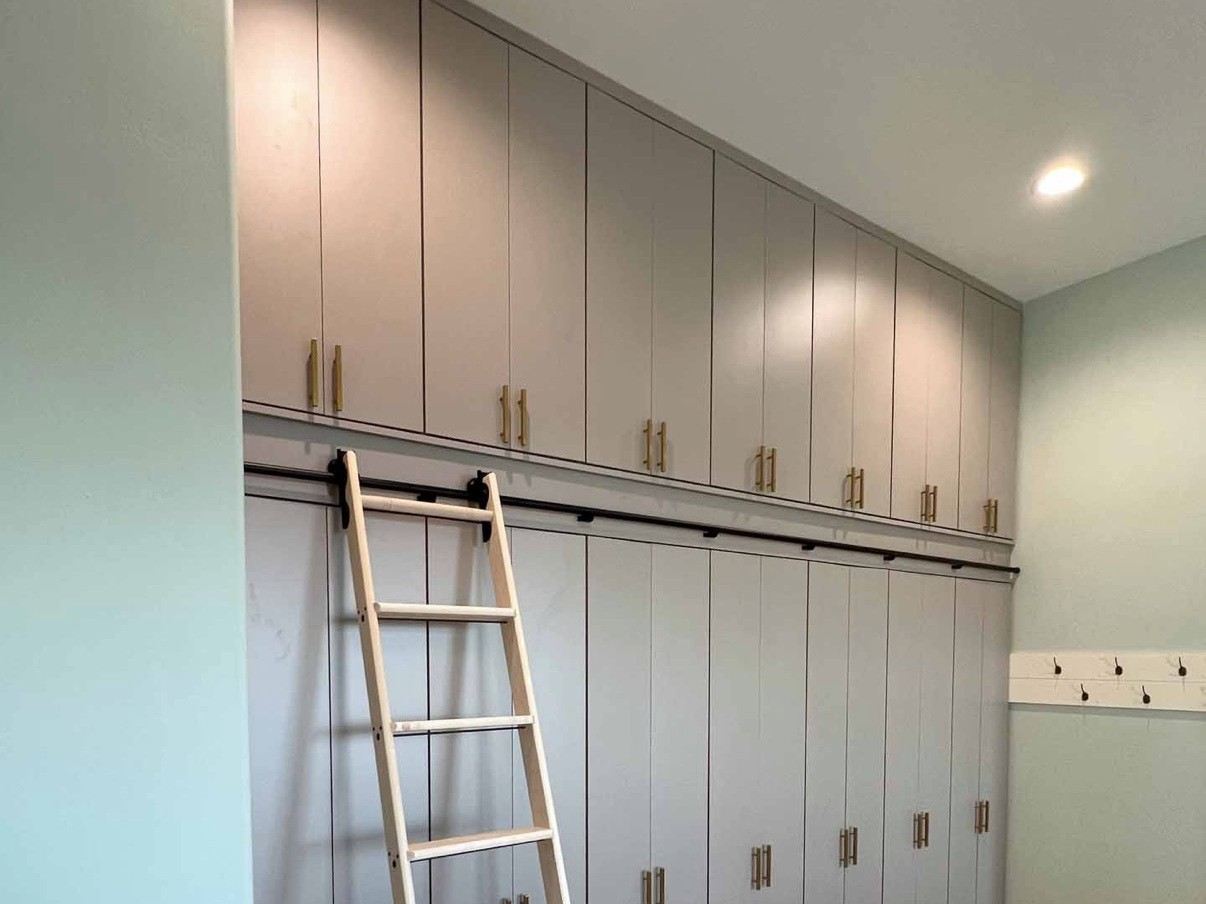
Vertical storage is one of the most effective ways to improve a compact laundry area without using valuable floor space. Upper cabinets, tall utility storage, and wall-mounted features keep supplies accessible while leaving room to move, load machines, and carry baskets.
A tall utility cabinet can hold brooms, mops, drying racks, ironing boards, bulk products, linens, and cleaning supplies in one contained area. Adjustable shelving adds flexibility for detergent containers, towels, laundry baskets, and changing household needs. Instead of committing every shelf to one item, adjustable positions allow the cabinet to keep pace with the way the household operates.
Wall-mounted organizers, hooks, and shallow shelves work well for items used often. Stain treatment, lint tools, drying clips, and lightweight cleaning supplies can stay close at hand without taking over the countertop. These features should remain shallow enough to preserve clear walkways and appliance access.
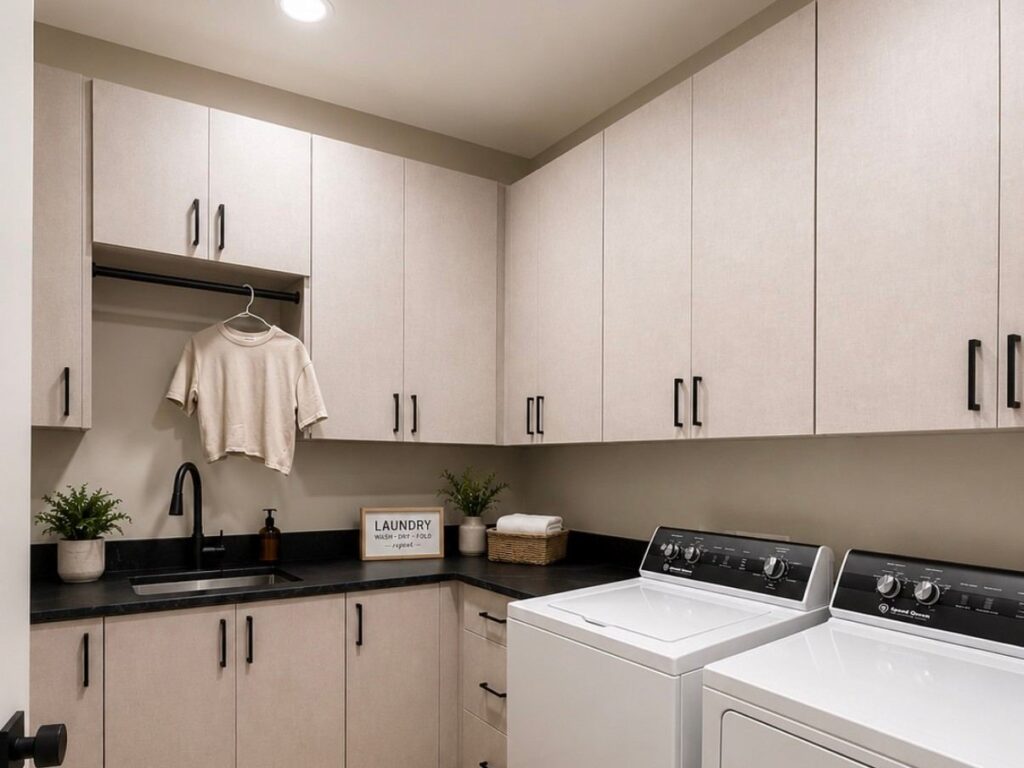
Side-by-side machines often leave a valuable wall area above the washer and dryer. Cabinets above washer and dryer setups can create concealed storage for detergent, paper goods, and seasonal linens. Shelves must stay shallow enough to avoid interfering with loading machines or reaching appliance controls.
Narrow gaps beside appliances may also support narrow laundry room storage. A slim pull-out, shallow shelf unit, or narrow cabinet can organize detergent, dryer sheets, stain treatment, and cleaning supplies. Dimensions, wall depth, dryer vent placement, plumbing, and utility access determine whether this option is practical.
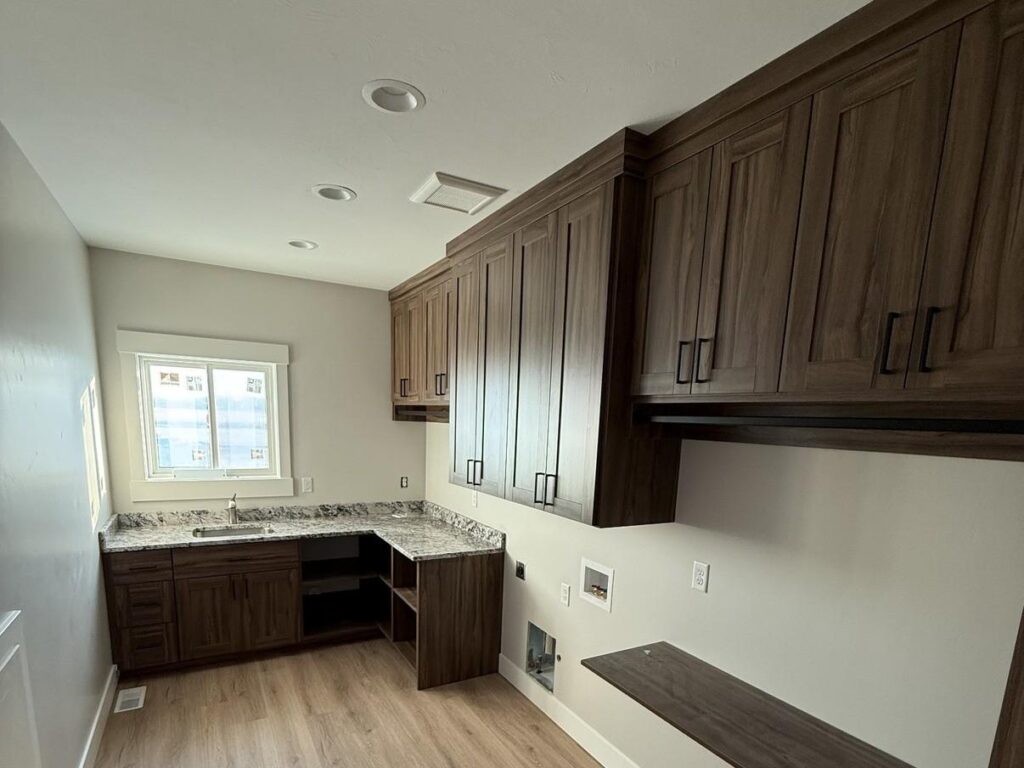
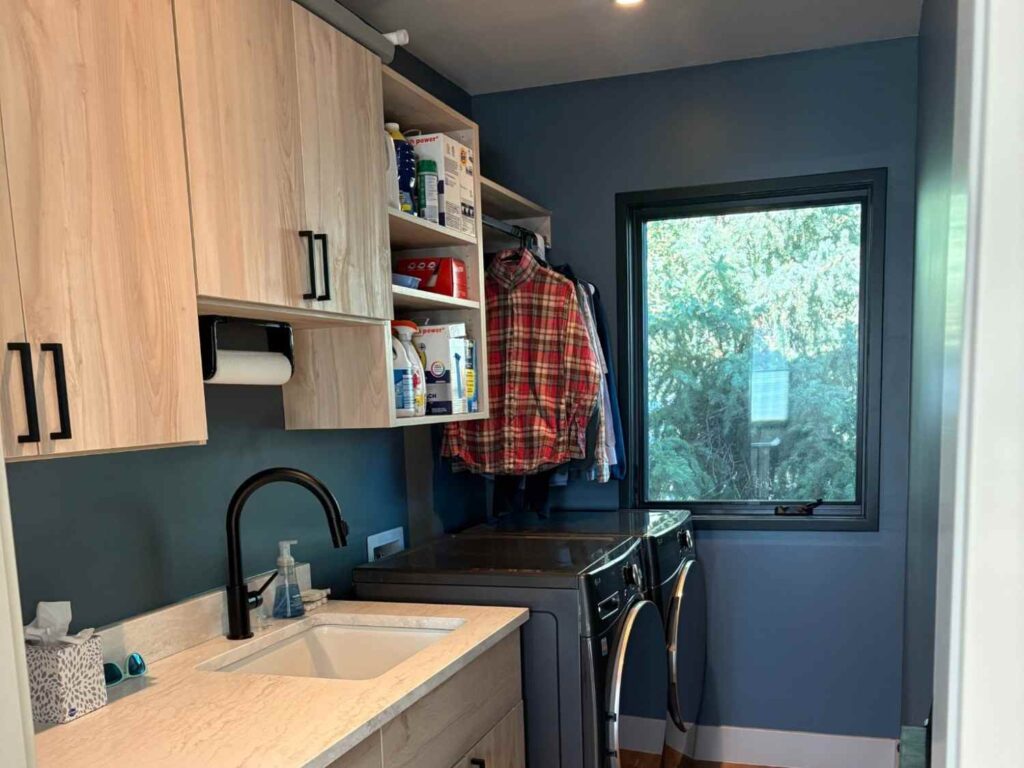
Original project visuals can help homeowners picture these solutions clearly: a compact laundry room with upper cabinets, a tall utility cabinet for cleaning tools, and narrow pull-out storage beside a washer and dryer. For additional planning ideas, our guide to maximizing laundry storage explains how a complete layout can make better use of limited space.
Build a Practical Workflow for Sorting, Folding, Drying, and Supply Storage
The strongest laundry room storage ideas for small rooms follow the actual laundry sequence: sorting, washing, drying, folding, hanging, storing supplies, and putting away linens. Each feature should reduce unnecessary steps without obstructing the room.
Pull-out hampers create a defined place to sort lights, darks, towels, and delicates before wash day. They work especially well inside cabinetry with adequate depth. In shallow rooms, fixed bins may be the simpler option. A well-placed basket system still keeps loads separated and avoids laundry piling up on the floor.
Folding space deserves early consideration. A countertop above front-load machines can provide a useful surface without adding another cabinet run. A side counter can work where appliances sit against one wall. Particularly narrow rooms may benefit from a fold-down surface that stays out of the way between uses. Top-load washers need sufficient lid clearance, so a fixed countertop above them often will not work.
Hanging rods, retractable drying racks, hooks, and designated basket storage can make daily tasks easier when the room allows them. Each feature needs careful placement. Drying items and hanging garments should never obstruct walkways, appliance doors, controls, or service areas.
Open shelving and closed cabinets serve different purposes. Open shelves offer visibility and quick access for supplies used every day. Closed cabinetry creates a cleaner appearance by concealing bulk products and visual clutter. Properly located and secured cabinets can also help keep laundry products away from children and pets.
A practical layout may combine both options. Closed upper cabinets can hold bulk supplies and less-used items, while one open shelf keeps detergent or a small basket within easy reach. Our laundry room cabinet guide offers further direction on selecting cabinetry that supports the available room and routine.
Original visuals can show the workflow in action, including pull-out hampers beneath a folding counter and a wall-mounted drying rack in a narrow laundry room.
Choose Storage Features That Fit Your Laundry Room Type
Small spaces do not all have the same limitations. A laundry closet, hallway laundry area, narrow utility room, stacked washer-and-dryer setup, and dedicated laundry room each call for a different approach. Appliance placement, plumbing, electrical access, ventilation, ceiling height, and usable wall space should guide every decision.
Laundry closets benefit from shallow shelving, compact hampers, fold-down surfaces, and overhead cabinets where access allows. Closet doors or curtains need to open without interfering with appliance use. Enclosed spaces also require clear ventilation and service access.
Hallway laundry areas need to stay visually calm and physically clear. Closed storage helps conceal supplies, while shallow wall-mounted storage can provide room for essentials without narrowing the passage. This layout often benefits from cabinets that match nearby finishes so the laundry zone feels connected to the home.
Narrow utility rooms usually work best with a single-wall storage plan. Vertical cabinets, slim pull-outs, and carefully placed folding or drying features make the most of limited width. Keeping storage concentrated along one side can protect the center walkway.
Stacked washer and dryer storage requires special attention to controls, wall depth, and service requirements. Adjacent tall cabinetry can store cleaning tools and linens, while shelving above or beside the unit may hold supplies if clearances allow. The goal is to use nearby height without making the appliances difficult to operate or maintain.
A small dedicated laundry room may accommodate a coordinated combination of upper cabinets, a folding surface, pull-out hampers, linen storage, and a utility cabinet. Our mudroom and laundry storage service focuses on layouts that bring these features together in a clear, functional plan.
When Simple Storage Is Enough—and When Custom Storage May Make Sense
Custom laundry room storage is not necessary for every home. Simple organization upgrades can be enough when the room has straightforward wall space and basic shelving needs. Freestanding carts, baskets, fixed bins, and wall hooks offer useful lower-cost improvements without a full renovation.
Custom storage becomes more valuable when a room has unusual dimensions, awkward obstructions, or very limited usable wall space. It can also help work around stacked units, utility connections, vents, and appliance clearances. A coordinated layout can combine cabinetry, pull-out hampers, folding space, and cleaning-tool storage without relying on several unrelated organizers.
Long-term durability also matters. Custom cabinetry gives us greater control over material selection, storage depth, door style, hardware, and the placement of accessories. It is particularly useful during a renovation or new-build project, where the storage plan can be considered alongside electrical, plumbing, and appliance decisions. Homeowners planning construction can learn more about custom cabinetry for new homes.
Several factors affect a custom laundry storage project: room dimensions, cabinetry layout, material and finish selections, hardware, countertop needs, pull-out accessories, electrical or plumbing changes, and installation complexity. We evaluate these details before recommending a plan, so the finished space supports daily use and preserves appliance access.
Homeowners in Eastern Idaho and nearby Wyoming who want custom laundry room storage based on their room’s dimensions, appliances, and routine can contact Taylor Made Closets for a consultation. We can discuss durable materials, cabinetry options, and professional installation for a layout that fits the space.
Common Questions About Small Laundry Room Storage
How can we add storage to a very small laundry room?
Use available wall height with upper cabinets, adjustable shelves, wall-mounted organizers, narrow storage beside appliances, and fold-down work surfaces where clearance allows. Start with vertical space before adding freestanding pieces that consume floor area.
Can we put cabinets above a washer and dryer?
Yes, as long as cabinets do not block appliance controls, access, ventilation, utility connections, or manufacturer-required clearances. Cabinet depth and mounting height should support easy loading and operation.
What storage works best in a laundry closet?
Shallow shelves, overhead storage, compact hampers, hooks, and fold-down surfaces can work well in storage for laundry closets. Each feature should preserve appliance access, ventilation, and door clearance.
How much space should be left around laundry appliances?
Follow the appliance manufacturer’s installation instructions and preserve access to controls, hookups, vents, and service areas. Exact requirements vary by appliance model and configuration.
Are open shelves or cabinets better in a small laundry room?
Open shelves provide quick visibility and easy access. Closed cabinets conceal supplies and can help keep products away from children and pets when properly located and secured. Many small rooms benefit from a combination of both.
Can custom cabinets work around stacked washers and dryers?
Yes. Custom cabinetry can work around stacked appliances when the design accounts for controls, utility access, ventilation, wall depth, and service clearances. Thoughtful stacked washer and dryer storage can add substantial organization without compromising safe appliance operation.