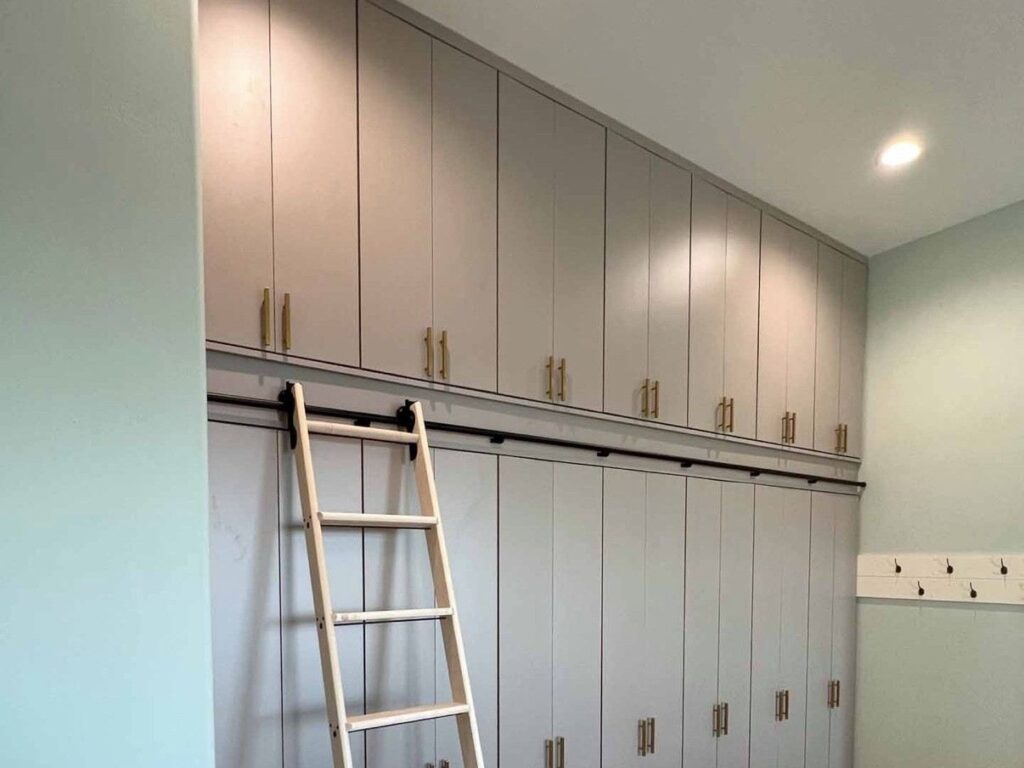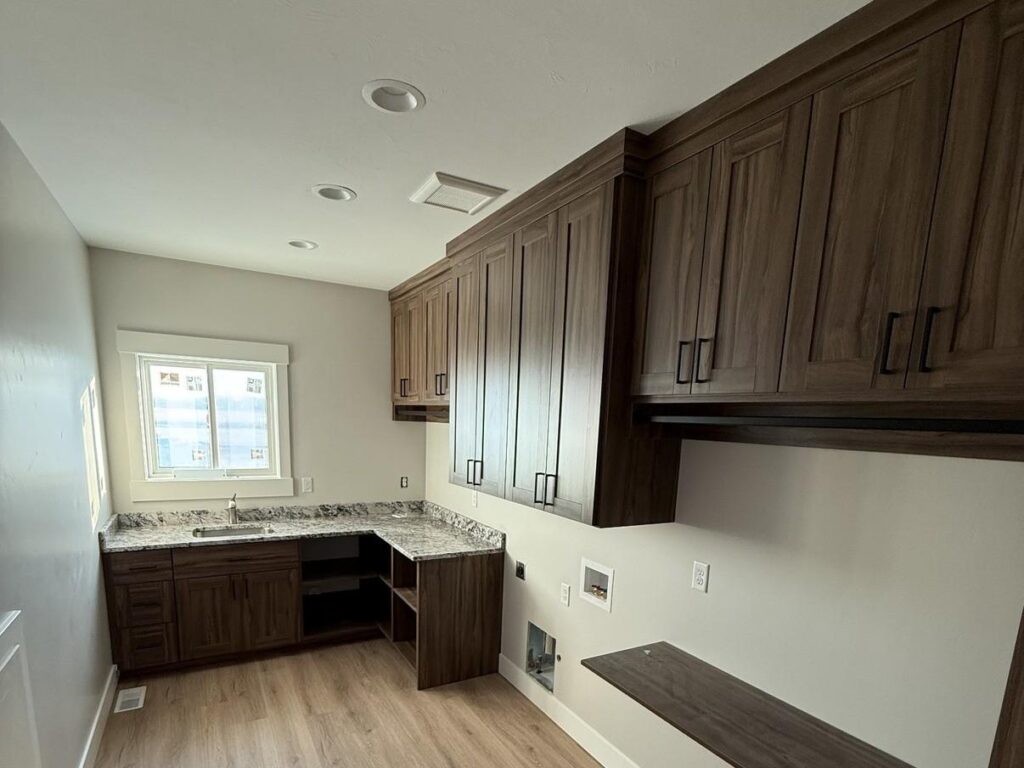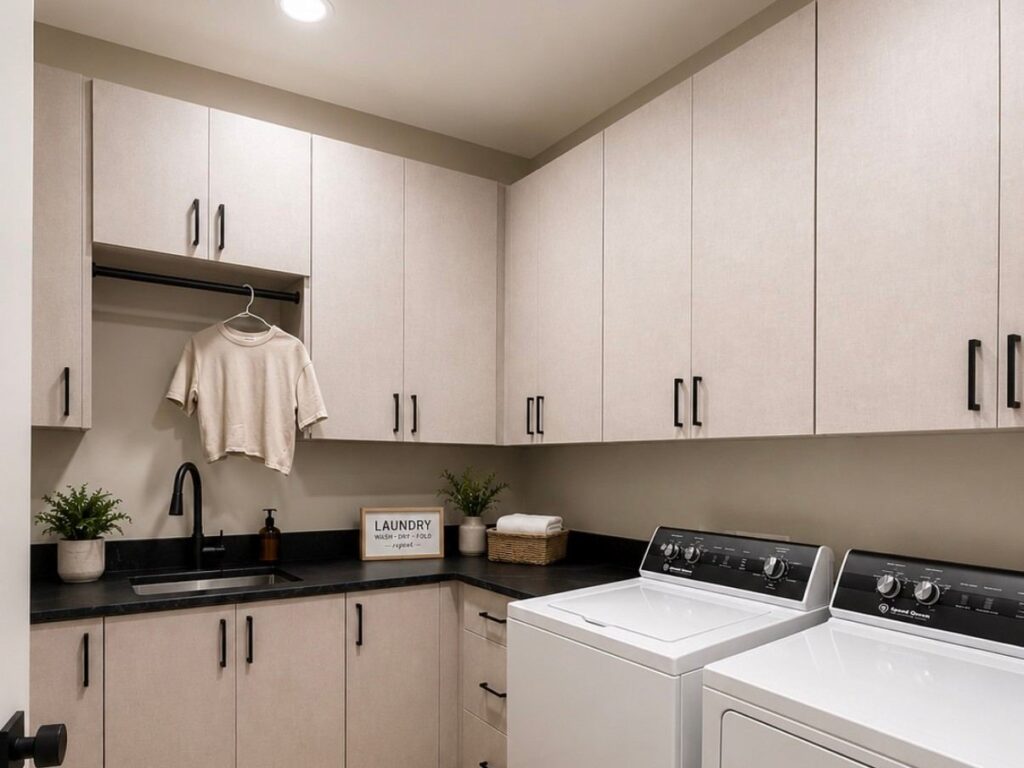
How Can Custom Laundry Room Design Maximize Storage?
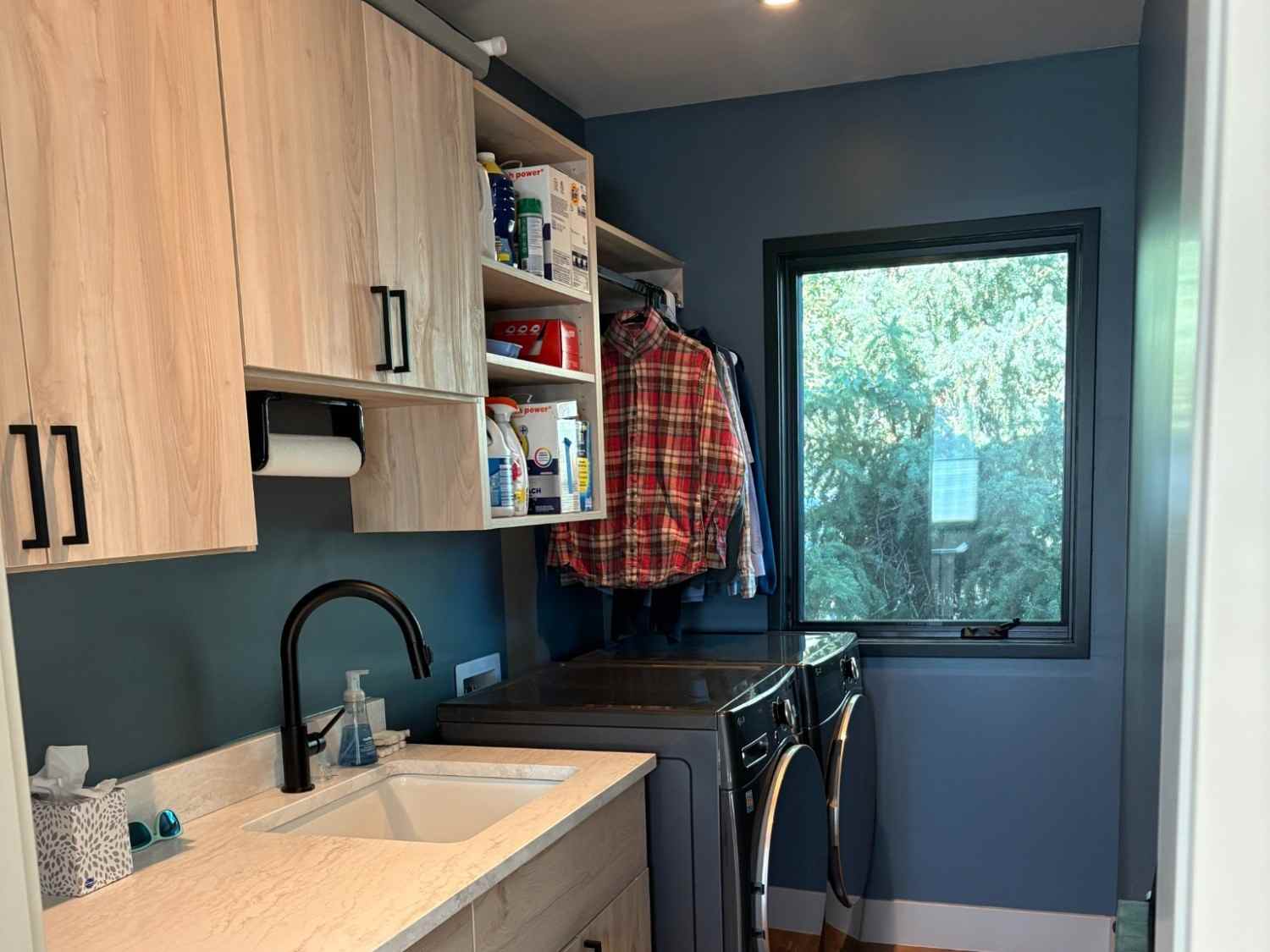
We create custom laundry room designs that maximize storage. We organize cabinets, hampers, counters, and drying areas around each household’s sorting, washing, folding, and put-away routine. Accurate measurements guide every choice. Appliance clearances, utility access, and room layout keep supplies within reach without crowding the workspace.
Key Takeaways
- We identify daily bottlenecks first. Overflowing hampers, limited folding space, and hard-to-reach supplies reveal which storage features add the greatest value.
- We use pull-out hampers, utility cabinets, adjustable shelves, and enclosed storage. These features give supplies, cleaning tools, and sorting bins a dedicated place.
- We add folding counters and hanging or retractable drying systems. These additions keep clean and air-dried clothing off nearby surfaces.
- We improve small laundry rooms with vertical storage, shallow cabinets, wall-mounted accessories, and appliance layouts that protect usable workspace.
- We plan cabinetry around appliance dimensions, door swings, ventilation, plumbing, electrical connections, and future service access before construction starts.
Start With the Way You Actually Do Laundry
A useful custom laundry room design should begin with your routine rather than with cabinets alone.
Think about what happens from the moment dirty clothes enter the room until clean items leave. Some households sort laundry by color. Others separate clothing by family member, fabric type, or washing cycle.
A professional mudroom and laundry storage plan can organize the room around these habits so storage supports the way the household already works.
Identify the Main Storage Problems
Before designing the room, look for the areas that create clutter or slow down the process.
Common problems include:
- Hampers overflowing onto the floor
- Detergent stored far from the washer
- No space for folding
- Cleaning tools leaning against walls
- Drying clothes hanging from doors
- Supplies stacked on top of appliances
- Shelves that are too deep or too high
These problems help determine which storage features should receive priority.
Use Pull-Out Hampers for Better Sorting
Laundry baskets often take up valuable floor space.
Built-in pull-out hampers provide a dedicated location for dirty clothing while keeping the room visually cleaner.
Separate hampers can also support sorting before wash day.
Create Different Sorting Zones
Depending on available space, hampers may be used for:
- Whites
- Colors
- Delicates
- Towels
- Bedding
- Individual family members
A pull-out design keeps baskets accessible without leaving them in walkways.
The exact configuration should match the household rather than adding more compartments than are actually needed.
Add Cabinets for Supplies and Cleaning Tools
Open shelves can make frequently used items easy to reach, but too many exposed supplies can make the room feel cluttered.
Enclosed cabinets provide a cleaner appearance and keep detergents, stain removers, paper products, and cleaning supplies in designated locations.
The broader range of storage services can help coordinate cabinetry with other organizational needs throughout the home.
Include Tall Utility Storage
Tall cabinets can make good use of vertical space.
They may provide room for:
- Brooms
- Mops
- Vacuum accessories
- Ironing supplies
- Cleaning products
- Extra towels
- Bulk household supplies
Adjustable shelves are useful because storage needs may change over time.
Build a Dedicated Folding Counter
A folding surface can make the laundry process more efficient.
Instead of carrying clean clothes into another room, a countertop lets you fold items immediately after removing them from the dryer.
The counter may sit above front-loading appliances or along an open wall.
Keep the Counter Clear
Avoid designing a folding counter that immediately becomes permanent storage.
Place detergent, cleaning products, and laundry accessories in nearby cabinets or drawers so the work surface remains available.
A clear counter can also help with sorting, stain treatment, and organizing clean clothes before they are put away.
Add Hanging and Drying Space
Not every item should go into a dryer.
A custom laundry room design can include a dedicated place for air-drying delicate clothing, shirts, athletic wear, or other items.
Options may include:
- Hanging rods
- Retractable racks
- Wall-mounted drying systems
- Fold-down drying racks
These features can reduce the need to hang wet clothing from doors, shower rods, or furniture elsewhere in the home.
Make Small Laundry Rooms Work Harder
A compact room can still provide useful storage when vertical and wall space are planned carefully.
Instead of filling the room with deep cabinets, use storage that matches the available depth.
Take Storage Up the Wall
Upper cabinets and shelves can hold items that are used less often.
Frequently used products should remain within comfortable reach.
Shallow cabinets may work well in narrow spaces because they provide storage without reducing the walkway too much.
Wall-mounted accessories can also hold ironing tools, small baskets, or cleaning supplies.
For homes with other limited storage areas, custom closets can use similar principles of vertical storage, adjustable shelving, and dedicated zones.
Plan Around the Washer and Dryer
Appliances should guide the cabinetry layout.
Record the exact washer and dryer dimensions before designing surrounding storage.
Allow enough room for doors and lids to open fully.
Keep Utilities Accessible
Cabinetry should not block:
- Water connections
- Drain lines
- Electrical outlets
- Gas connections
- Dryer vents
- Shutoff valves
Future appliance service also matters.
A beautiful storage system can become frustrating if a technician cannot reach connections without removing cabinetry.
Protect Ventilation and Appliance Clearances
Washers and dryers may require specific spacing for airflow, hoses, vents, and service access.
Manufacturer instructions should be reviewed before construction starts.
Avoid forcing appliances into openings that leave no room behind or beside them.
Proper clearance can also make it easier to remove and replace appliances later.
Choose Finishes That Suit the Room
Laundry rooms experience moisture, detergents, frequent handling, and regular cleaning.
Materials should be selected with these conditions in mind.
Homeowners can explore available finish options when choosing colors and surfaces that coordinate with the rest of the home.
Keep the Design Visually Consistent
A laundry room can feel more organized when cabinets, counters, hardware, and accessories follow a consistent style.
Light finishes may help a small room feel more open, while darker finishes can add contrast in larger spaces.
Function should still come first. A finish should work with the room’s daily use and maintenance needs.
Connect Laundry Storage With Nearby Spaces
Some laundry rooms also function as mudrooms, utility rooms, or household storage areas.
In these cases, the layout may need room for shoes, coats, backpacks, pet supplies, or seasonal items in addition to laundry supplies.
A unified plan prevents these different functions from competing for the same shelves and counters.
Taylor Made Closets can design storage around the specific dimensions and routines of the household rather than relying on a one-size-fits-all layout.
Homeowners can also review the company’s service area when planning a custom storage project.
Design Storage Around Long-Term Use
A successful custom laundry room design should remain practical after the initial installation.
Think about how appliance sizes, family needs, and storage habits may change.
Adjustable shelving and flexible storage zones can make the room easier to adapt.
The strongest layouts give every major task a clear place:
- Sorting
- Washing
- Drying
- Folding
- Hanging
- Storing supplies
- Putting clothes away
When these steps flow naturally, the room can feel less crowded even without adding square footage.
For help creating a laundry room storage plan that fits your space and routine, contact us to discuss your project.
Frequently Asked Questions About Custom Laundry Room Design
What should a custom laundry room include?
A useful laundry room may include cabinets, adjustable shelves, hampers, a folding counter, hanging space, and storage for cleaning tools. The exact features should match your laundry routine and available space.
How can I add more storage to a small laundry room?
Use vertical space, upper cabinets, shallow shelving, wall-mounted accessories, and pull-out storage. Keeping the floor and main walkway clear can also make a compact room easier to use.
Is it useful to put cabinets above the washer and dryer?
Yes. Cabinets above appliances can use otherwise empty wall space for detergent, stain removers, towels, and extra supplies. They should be positioned so commonly used items remain easy to reach.
How much clearance should cabinetry leave around laundry appliances?
Clearance depends on the appliance manufacturer and model. The design should allow for ventilation, hoses, vents, electrical or gas connections, door operation, and future service access.
Why is custom laundry room storage better than standard shelving?
Custom storage can be sized around the room, appliances, utilities, and household routine. This makes it possible to use awkward spaces, create dedicated storage zones, and protect working areas from unnecessary clutter.